Non-trivial Mars bars
~ An Introduction to Natural Maths ~
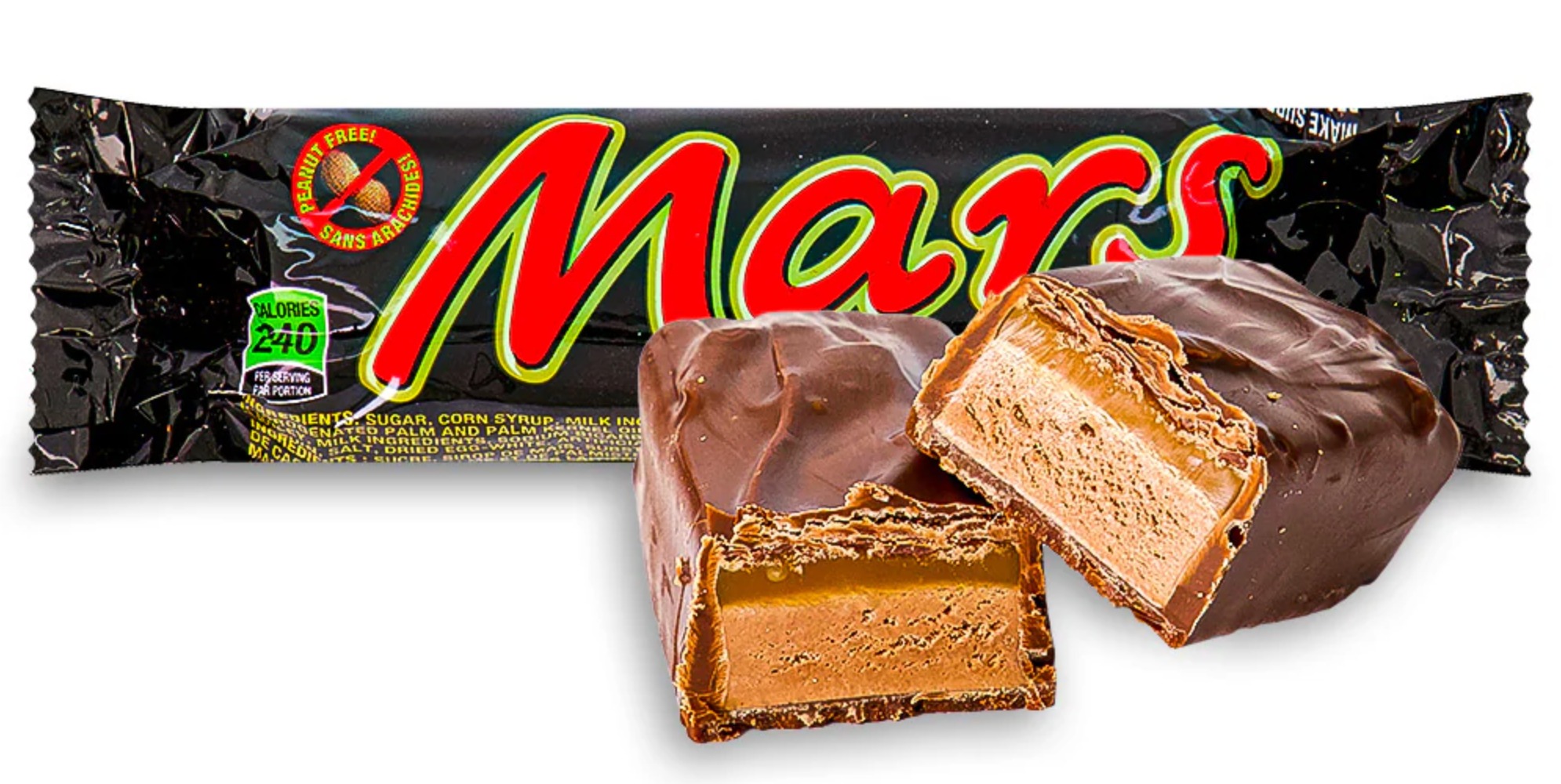
A child asks his father if he has any Mars Bars. The father answers that he has zero Mars bars.
The child asks: “Can you halve zero - because if you can then we can share?”
They tried it with a zero Mars bar which they put on a table and cut in half. They then took a half each and decided that as they both now had half a zero Mars bar you must be able to halve zero!
Reflecting, it had actually been very easy to cut the zero Mars bar. So easy, in fact, they had been able to make the cut in such an exact way that the 2 portions were precisely (fundamentally?) equal.
They hadn't even needed a knife!
Are these lame dad jokes actually nature hinting at something profound? 🧐
The half a zero Mars bar premise:
For any structure 𝑆, 𝑆 / 2 produces the smallest non-trivial structural unit consistent with 𝑆
You can operate on something that isn't there as long as the rule is consistent - implying:
In nature, and everyday speech, zero is a relationship and often (always?) behaves this way:
Sharing zero → a rule about fairness → I've got nothing I can share
Cosmological example → a region with zero net force remains zero when divided
Example:
The Lagrange points 𝐿4 and 𝐿5 in a two-body system lie in regions of zero net force. You can “divide” this equilibrium region into smaller equilibrium cells — the rule holds at every scale.
Interpretation:
Zero mass → zero force → still a consistent rule that structures orbital behaviour.
Zero is infinitely divisible without approximation because it has no internal structure.
Zero division exposes symmetry.
Halving a non-zero Mars bar is... non-trivial
The next day, when the child returned from school he saw a one Mars bar on the table. The child asked:
“Can we share this one Mars bar the same way we shared the zero Mars bar?”
“No“, replied the father, “we cut the zero Mars bar precisely in half and any attempt we make to create two exactly equal half one Mars bars will fall foul of numerous paradoxes related to set theory, in addition to a bewildering amount of practical concerns such as a one Mars bar being a vast congregation of molecular bonds that don’t break symmetrically“
Exact division is only possible if the divisor's internal structure belongs to the same category as the division rule.
Since a Mars bar is not built from “Mars Bar atoms”, you cannot divide it with exact symmetry; the precision fails because the object is heterogeneous - implying:
A zero Mars bar qualifies: zero has no category.
A one Mars bar does not qualify: it is a composite of many categories.
The “uncertainty about how much half a Mars bar is“ principle...? 🤔
Non-zero division reveals structure.
Some time later, mum came home and found the child and his father looking perplexed and staring at a one Mars bar. They told her about the symmetrical catastrophe to which she asked:
“Why don't you just cut it (roughly..🙄) in half?“
There seemed a lot of sense in this but, just as father was about to slice, she said:
“That Mars bar looks tasty! Can you cut it into 3 pieces so I can have some too?“
“No“, said dad, “as no matter how I cut the one Mars bar I can only cut it into 2 pieces. A symmetrical operation can only ever result in 2 parts implying:
2 is duality: nature's (only) knife
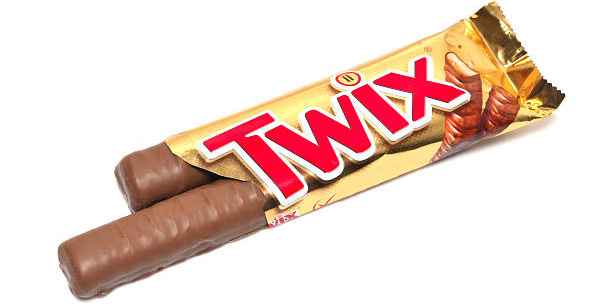
The next day, in a gesture to family harmonics, mum came home with a one Twix which she left on the table next to all the zero Mars bars. She noticed there were all types of zero mars bars - some cut into 3 pieces, some cut into infinite pieces and those pieces cut in the same infinite way implying:
Next to the infinite pile of half zero Mars Bars, she also noticed an infinite amount of -1 Twix.
She recalled from school that:
..so if she took two -1 Twix from the table (and bashed them together?) would she get a one Twix? 🤔
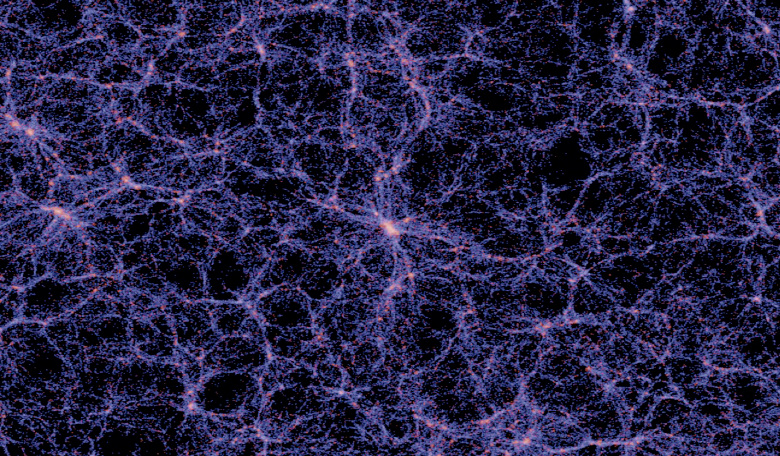
“Thats not how it works...“ whispered the one universe
The Phil Officer
When her child got home from school he seemed somewhat subdued. She asked him what was the matter?
“I only scored 9 out of 10 on my maths exam.“
“Oh dear!“, mum replied, “which question did you get wrong?“
“I think the answer is -1. I explained to my teacher that:
...but he said I was being a Phil Officer and that the correct answer was 1“
“One what?“ said mum, recalling her failure to conjur a one Twix, "It depends what you are talking about."
They looked at the one Twix, then at all the zero Mars bars.
"A Twix is two things," she said, "so why do we call it a one Twix?" 🤔
The Ommipotent One
"One" is not a fundamental constant of the universe.
It is an arbitrary boundary delineating a collection of things to make them manageable, implying:
The Twix Principle:
Depending on your resolution, "One" flows and is mellifluous but ever present: all is one 🧘
It can expand and contract to be whatever it needs to be at any (one...) time.
In algebra, we treat as a rigid stone. In reality, is a fluid gas.
If changes size during the equation, the logic holds, but the answer changes.
implying:
(and you can't split atoms...)
Classical mathematics treats '1' as the fundamental object of creation but the universe knows only of boundaries.
1's, and in fact all numbers, which can be represented as 1 in some context anyhow, are defined solely by their external boundaries and irrespective of their internal complexity. All is indeed One.
Thus, the unit of structure in Natural Maths is defined as:
The unit is a structural definition and allows the axioms of symmetry to hold:
and the symmetrical identity:
to describe the symmetries of structure defined by boundaries.